Farming Practices
We Farm Regeneratively For Our Family & Yours
As regenerative farmers, the health of the soil plays an integral role in the stewardship of our land. There are many ways to farm regeneratively. Read below to learn about some of the practices we utilize.
Food Grown The Way Mother Nature Intended
Our farming style is regenerative, or beyond organic. We work with the tried and true systems of nature to focus on biodiverse microclimates, thriving soils, and organically-grown and nutrient-dense crops.
Our Regenerative Approach
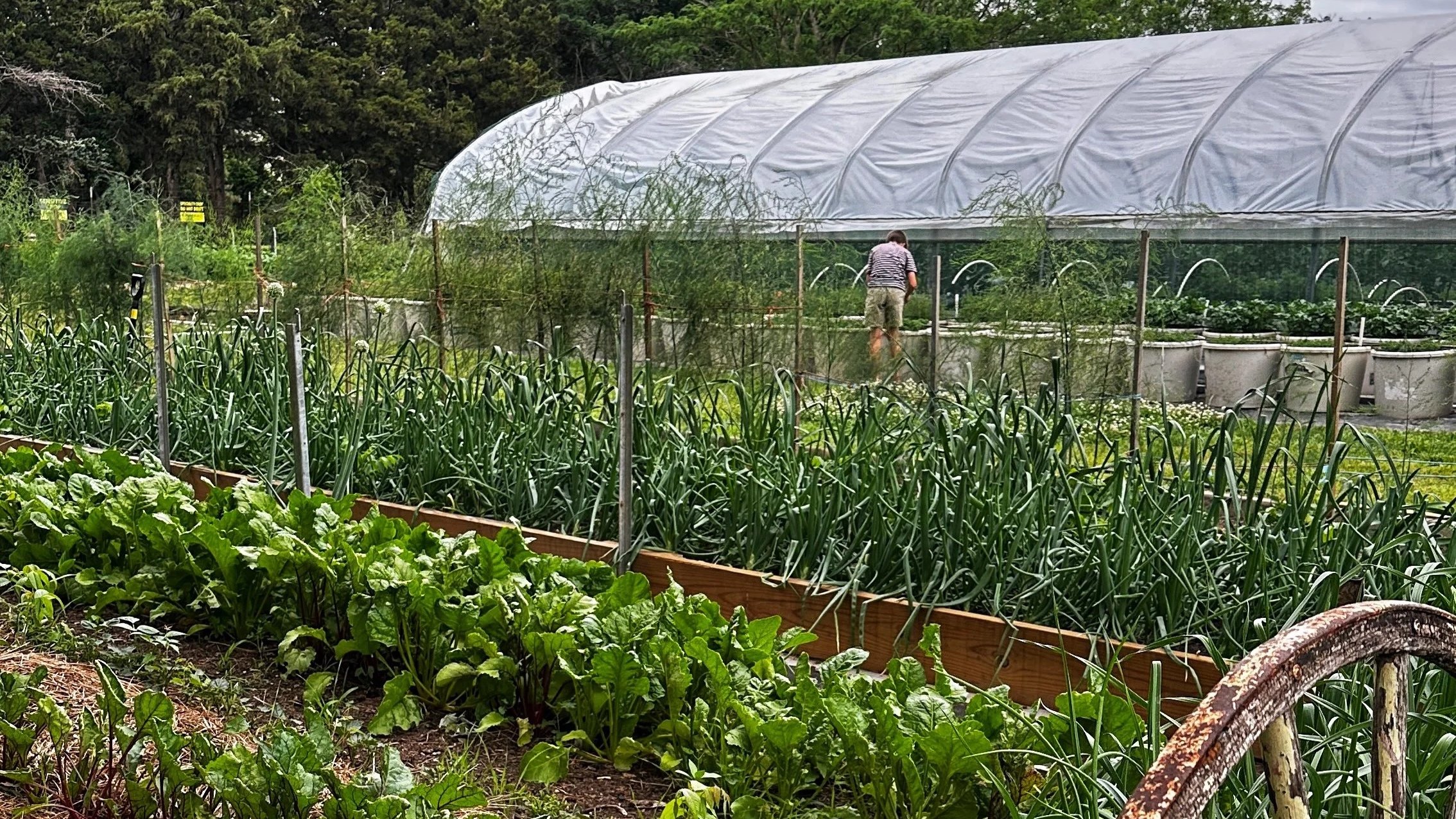
Absolutely no chemical fertilizers, pesticides, or herbicides are used — for our family’s health, and for yours! We utilize sustainable practices like composting, hügelkultur, crop rotation, holistic sheep and goat grazing, cover cropping, and tarping garden beds to manage weeds without toxic herbicides. To encourage biodiversity and resist monoculture practices, we interplant many of our crops, maintain diverse pastures between gardens, and have beehives on our acreage.

A stunning Kansas sunset is contrasted beautifully against our diverse pasture.
This paddock is ready to be grazed by our small flock of sheep. We utilize small-scale rotational grazing to manage pasture areas on our farm. This enables us to build healthy, thriving soils.

We think monoculture lawns are overrated.
Dandelion and wild violet blooms provide an essential early season nectar source to honeybees. In addition, we want to be able to roam freely outdoors without the risk of absorbing toxins through the soles of tender feet.

Our farm is registered with FieldWatch.
This is intended to safeguard our site against residential chemical drift. Lawn care companies are supposed to check this registry for guidance when applying chemicals to home and commercial landscapes.

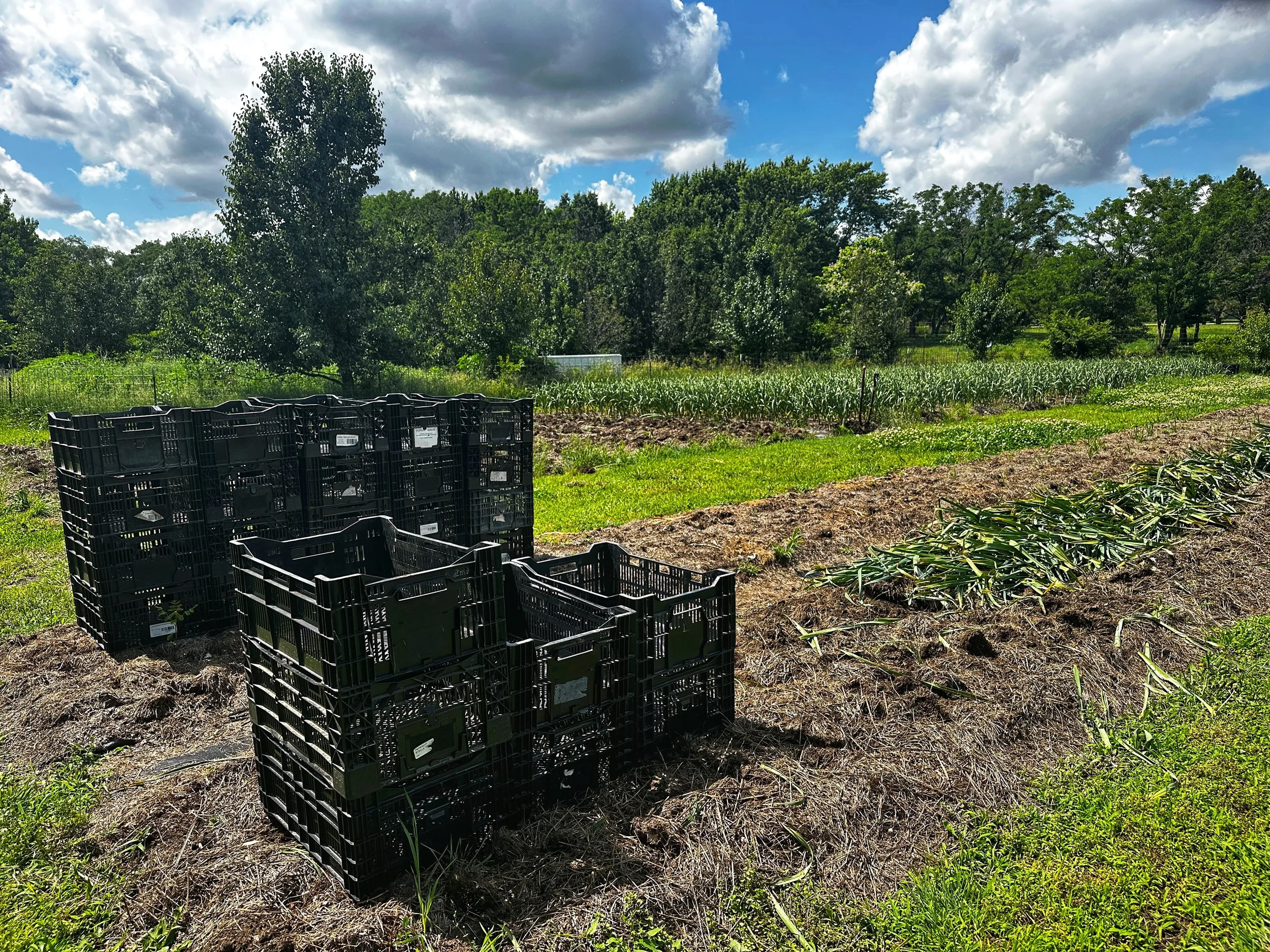
Fall on the farm can only mean one thing — garlic planting.
These beds were tarped for 2-3 months, which helps manage weed seeds without harming the soil biome.